
Fire can destroy years of hard work within minutes. A shop full of stock, a factory with machines, a home with furniture, or an office with important equipment can suffer heavy loss because of one accidental spark, short circuit, gas leakage, lightning, or explosion. This is why fire insurance is not just a policy document; it is financial protection against one of the most sudden and damaging risks.
Fire insurance helps property owners, business people, shopkeepers, factory owners, landlords, tenants, and homeowners recover from losses caused by fire and certain allied perils. In India, standard fire-related products can cover risks such as fire, lightning, explosion or implosion, aircraft damage, riot, strike, malicious damage, storm, flood and other listed perils, depending on the policy wording. The General Insurance Council describes the Standard Fire and Allied Perils Policy as a policy covering fire and several allied risks.
However, fire insurance is not unlimited protection. It has exclusions, claim conditions, documentation rules, and coverage limits. So, before buying it, one must understand both its advantages and disadvantages properly.
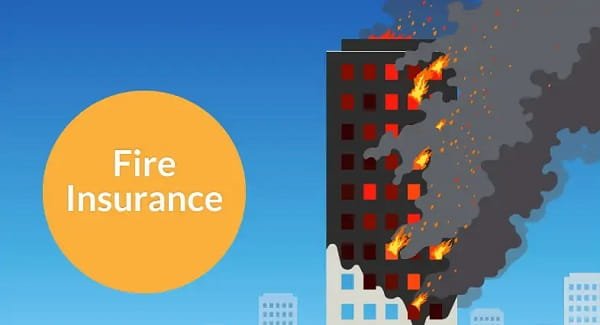
What is Fire Insurance?
Fire insurance is a type of general insurance that provides financial protection against loss or damage caused by fire and covered allied perils.
It can cover different types of property, such as:
- Residential buildings
- Shops and offices
- Factories and warehouses
- Machinery and equipment
- Furniture and fixtures
- Stock and raw materials
- Home contents
For homes, IRDAI introduced the standard Bharat Griha Raksha policy to cover home buildings and home contents against fire and allied perils.
How Fire Insurance Works
The policyholder pays a premium to the insurance company. In return, the insurer agrees to compensate the insured if covered property suffers damage due to fire or other insured events.
If a fire occurs, the policyholder must inform the insurer quickly, protect the remaining property from further damage, and submit claim documents. The insurer may appoint a surveyor to assess the loss. After verification, the claim is settled according to the policy terms, sum insured, exclusions, and actual loss.
Advantages of Fire Insurance
1. Financial Protection Against Heavy Loss
The biggest advantage of fire insurance is financial support after a major loss. Rebuilding a shop, repairing a house, replacing machinery, or restocking goods can be very expensive. Fire insurance reduces this financial burden.
2. Useful for Businesses
For businesses, fire can stop operations completely. Fire insurance can help recover the cost of damaged stock, equipment, furniture, and buildings, depending on the policy. This helps business owners restart faster.
3. Protects Homes and Contents
Homeowners can protect the structure of the house and household contents. Bharat Griha Raksha policies cover home building and home contents, and some insurers mention built-in general contents cover linked to the building sum insured, subject to limits.
4. Covers Allied Perils
Many fire policies do not cover only fire. Depending on the policy, they may also cover lightning, explosion, storm, flood, riot, strike, impact damage, and other named risks. This makes the policy broader and more useful.
5. Gives Peace of Mind
A property owner cannot prevent every accident, but insurance gives confidence that the loss may not completely destroy financial stability.
6. Important for Loan and Mortgage Cases
Banks may ask borrowers to insure property taken as security. For example, if a factory or house is financed by a loan, fire insurance protects both the borrower and lender.
7. Supports Business Continuity
After a fire, quick claim support can help a business repair damage, replace assets, and resume operations.
Disadvantages of Fire Insurance
1. Does Not Cover Everything
Fire insurance covers only risks mentioned in the policy. Damage due to exclusions may not be paid. Policyholders must read the wording carefully.
2. Claim Settlement Needs Proof
The insured must prove the loss, submit documents, and cooperate with surveyors. If records are poor, claim settlement may be delayed.
3. Underinsurance Problem
If the property is insured for less than its actual value, the claim may be reduced. Many people choose a lower sum insured to save premium, but this can hurt them during a claim.
4. Premium Cost
Fire insurance adds an annual cost. For large factories, warehouses, hotels, or shops with high-risk materials, the premium can be significant.
5. Exclusions and Conditions
Loss caused by war, nuclear risks, intentional damage, or certain excluded events may not be covered. Some policies may need add-ons for specific risks.
6. Delay in Claims
Large fire claims may take time because survey, damage assessment, documents, police/fire brigade reports, and repair estimates are required.
7. Valuation Disputes
The insurer and policyholder may disagree on the amount of loss, depreciation, repair cost, stock value, or cause of fire.
8. Carelessness Can Affect Claim
If the insured violates safety rules, stores hazardous materials carelessly, or hides important facts while buying the policy, claim problems may arise.
Who Should Buy Fire Insurance?
Fire insurance is useful for homeowners, tenants with valuable contents, shopkeepers, office owners, factory owners, warehouse operators, landlords, schools, hospitals, hotels, and small businesses.
It is especially important where property value, stock value, machinery, or business assets are high. A small premium can protect against a loss that may otherwise take years to recover.
Safety Tips Along With Fire Insurance
Insurance is important, but prevention is even better. Install fire extinguishers, maintain electrical wiring, avoid overloading sockets, store flammable materials safely, and train staff in emergency response.
Keep purchase bills, stock records, property papers, photos, and insurance documents safely. These records can help during claim settlement.
Conclusion
Fire insurance is a valuable protection tool for homes, shops, offices, factories, warehouses, and business assets. Its biggest advantages are financial protection, business recovery support, peace of mind, and coverage against fire and allied risks.
But it also has limitations. It does not cover every loss, claims need documents, underinsurance can reduce compensation, and exclusions must be understood clearly.
In simple words, fire insurance cannot stop a fire, but it can stop one accident from becoming a complete financial disaster.
FAQs on Fire Insurance
Q: Is fire insurance useful for a small shop?
A: Yes. A small shop may lose stock, furniture, electrical fittings, and equipment in a fire. Fire insurance can reduce the financial shock.
Q: Does fire insurance cover short circuit damage?
A: Fire caused by short circuit may be covered if it results in an insured fire event, but electrical damage alone may depend on policy terms and exclusions.
Q: Can tenants buy fire insurance?
A: Yes. Tenants may insure household contents or business stock even if they do not own the building.
Q: What documents are needed for a fire insurance claim?
A: Usually, claim form, policy copy, fire brigade report, photos, bills, stock records, repair estimates, and other documents requested by the insurer may be needed.
Q: What is underinsurance in fire insurance?
A: Underinsurance means the property is insured for less than its actual value. In such cases, the claim may be reduced proportionately.
Q: Should I insure only the building or contents also?
A: If you own valuable furniture, stock, machines, electronics, or household goods, contents cover is also important.