
There is a particular kind of person who opens a demat account the week after their first SIP goes through. I was one. The fund felt slow and slightly beneath me, and buying stocks directly felt like the grown-up version of the same thing. Two years and one badly timed mid-cap later, I had learned the difference between owning the market and trying to beat it, and I had paid tuition for the lesson.
The question is not which route is better. Both work, for different people, in different amounts. The question is which one you are actually equipped for, and most people answer that with their ego rather than their calendar.
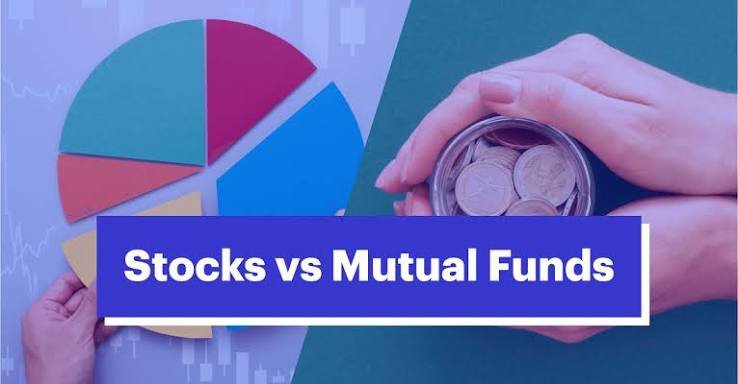
How Much Time Do You Actually Have to Manage Stocks
Start here, because everything else is downstream of it.
Buying individual stocks well is a job. Not a hobby, a job. You read annual reports, you follow quarterly results, you keep track of what management promised and whether they delivered, you notice when a competitor changes the picture, and you do this for every company you own, every quarter, for as long as you own it. Twelve companies is a part-time position.
An equity mutual fund asks almost nothing of you once it is set up. A manager and a research team do the reading. You check in occasionally, keep the SIP running, and ignore most of the noise.
So the first filter is brutally simple. If you cannot name the last three quarterly results of a company you own, you do not have time to own stocks directly. That is not a criticism. It is just an answer.
The Knowledge Gap Between Picking Stocks and Picking Funds
Here’s the thing about stocks. Everyone who buys them believes they know something the market does not. Statistically, almost nobody does.
The person on the other side of your trade is frequently a fund house with analysts who have met the management, modelled the business, and spoken to its suppliers. You are not competing against other retail investors. You are competing against them. Occasionally you will win, usually on a small company nobody is covering. Mostly, over time, the edge is theirs.
That does not mean direct investing is pointless. It means it demands real knowledge, of accounting, of the industry, of what a reasonable valuation looks like, and an honest sense of where your knowledge ends. The investors who do well picking stocks tend to stay in two or three industries they understand deeply and ignore everything else. The ones who do badly buy whatever is being discussed that week.
Why the Real Risk in Stocks Is Concentration, Not Volatility
People assume stocks are riskier than funds. True, but the reason matters.
A fund holds fifty or sixty companies. One of them going badly wrong costs you a fraction of a percent. A direct portfolio of eight stocks has one going wrong costing you an eighth of your money, and eight is more than most retail investors actually hold. Concentration is the risk, not the asset class.
There is also a quieter risk. With direct stocks, your mistakes are yours alone, and you will know exactly which decision caused the loss. That is more painful than a fund underperforming, and pain changes behaviour. People who lose money on a stock they picked often stop investing entirely. People whose fund has a bad year usually keep the SIP going. The second habit builds wealth. The first does not.
Direct Stocks vs Equity Mutual Funds: A Side-by-Side Comparison
| Factor | Direct stocks | Equity mutual funds |
| Time required | Hours every week, more at results season | A few hours a year |
| Knowledge needed | Accounting, valuation, industry context | Enough to pick a category and a fund |
| Diversification | Only what you build yourself | Built in, fifty-plus holdings typical |
| Cost | Brokerage and taxes on every trade you make | Expense ratio, charged whether or not you trade |
| Control | Total, including over your mistakes | None over holdings, full over how much and when |
| Tax events | Every sale you make | Only when you redeem units |
| Emotional load | High, every decision is personal | Lower, the manager takes the blame |
Read the table for what it is: a list of trade-offs, not a scoreboard. Control and cost favour one side. Time and diversification favour the other.
How to Split Your Money Between Stocks and Mutual Funds
I would split it rather than choose.
Put the bulk of your equity money, the part that is actually meant to fund retirement or a house or a child’s education, into one or two equity mutual funds and leave it alone. That money does not need your opinions. It needs decades and an automatic transfer.
Then, if you want to, carve out a slice for direct stocks. Ten or fifteen percent of your equity money is plenty to start. Treat it as the part where you learn, where a bad call costs you a lesson rather than a life goal, and keep honest records of how it does against the fund. After three years you will know, in your own numbers, whether you have an edge or whether you have a hobby.
Most people discover it is a hobby. That is fine. Hobbies are allowed, as long as they are funded like hobbies.
Conclusion
I still own stocks directly. A handful, in industries I have followed for years, sized so that being wrong about all of them at once would be unpleasant rather than ruinous. The rest sits in funds, which is to say the rest sits with people who do this for a living and have more time than I do.
That is not a compromise. It is the answer the question was pointing at all along. Match the route to the time you have, the knowledge you can defend, and the losses you can absorb without changing who you are as an investor. The rest is just preference.