
Jammu & Kashmir Bank is technically classified as a private sector bank by the Reserve Bank of India (RBI), but it functions more like a government bank because the Government of Jammu & Kashmir holds a majority stake in it.
This makes J&K Bank a unique case in Indian banking. It is officially listed under private sector banks, yet the state government’s dominant shareholding gives it the characteristics of a government-backed institution.
The bank operates under the supervision and regulations of the Reserve Bank of India (RBI) and follows all guidelines applicable to scheduled commercial banks in India.
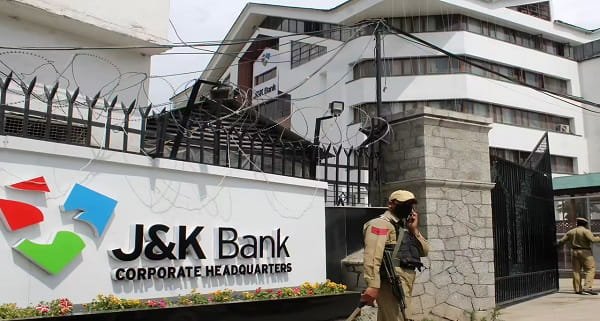
About Jammu & Kashmir Bank
Jammu & Kashmir Bank Limited, commonly known as J&K Bank, is one of the oldest and most prominent banks in the Jammu & Kashmir region. It was established in 1938 and is headquartered in Srinagar, Jammu & Kashmir.
The Government of Jammu & Kashmir is the single largest shareholder of the bank, holding more than 60% of its total shares. Because of this majority government shareholding, the bank is often treated and recognised as a public sector bank at the state level, even though the RBI officially categorises it as a private sector bank.
Today, J&K Bank provides various financial and banking services across India.
Its services include:
- Savings accounts
- Current accounts
- Personal loans
- Home loans
- Gold loans
- Fixed deposits
- Mobile banking
- Internet banking
- Government-linked banking services
- SME and agri banking
The bank has a strong presence in Jammu & Kashmir and Ladakh and also operates branches across other Indian states.
Why Is There Confusion About J&K Bank’s Ownership?
There are several reasons behind the confusion.
First, the Government of Jammu & Kashmir holds a majority stake in the bank. This naturally makes people believe it is a government bank, and functionally, it does operate very closely with the state government.
Second, J&K Bank serves as the official banker to the J&K state government and handles government transactions, treasury functions, and public sector payments. This role is typically associated with government banks.
Third, the bank has been in operation since 1938 and has a deep-rooted connection with the people and administration of Jammu & Kashmir, which further adds to the perception of it being a government bank.
However, as per the RBI’s official classification, J&K Bank is listed as a private sector bank.
How Is Jammu & Kashmir Bank Managed?
J&K Bank earns revenue through banking and financial services provided to customers as well as government-linked banking activities.
Its income mainly comes from:
- Loan interest
- Gold loan services
- Home loan financing
- Government treasury and transaction services
- Banking charges and fees
- Investments and deposits
The bank is managed by its board of directors and executive leadership. However, since the J&K government holds a majority stake, state government influence plays a significant role in the bank’s governance and key appointments. The RBI supervises the bank’s operations as a scheduled commercial bank.
Difference Between J&K Bank and Other Government Banks
There are several differences between J&K Bank and typical government-owned banks in India.
- RBI Classification
- J&K Bank is officially classified as a private sector bank by the RBI.
- Government banks like SBI, PNB, and Bank of Baroda are classified as public sector banks.
- Ownership
- J&K Bank is majority-owned by the J&K state government, not the Government of India.
- Other government banks are owned by the central Government of India.
- Operational Scope
- J&K Bank primarily serves Jammu & Kashmir and Ladakh with a limited national presence.
- Central government banks operate on a pan-India scale with thousands of branches.
- Business Focus
- J&K Bank focuses strongly on the J&K region, state government banking, and local retail customers.
- Central government banks handle broader public sector and national priority sector banking activities.
Why Jammu & Kashmir Bank Is Popular
J&K Bank is popular because of:
- Deep-rooted presence in Jammu & Kashmir and Ladakh
- Official banker to the J&K state government
- Trusted banking services since 1938
- Strong focus on local retail and business customers
- Growing digital banking services
- Close connection with government-linked banking activities
The bank is widely used by individuals, government employees, traders, and businesses across Jammu & Kashmir and Ladakh.
Conclusion
Jammu & Kashmir Bank is officially classified as a private sector bank by the RBI, but it is majority-owned by the Government of Jammu & Kashmir with over 60% shareholding.
This makes J&K Bank one of the most unique banks in India. It operates with the characteristics of a government bank but is technically listed as a private sector bank. For banking exams and official purposes, J&K Bank is always referred to as a private sector bank as per RBI classification.