
India’s banking system in 2026 is no longer limited to branches, passbooks and cheque books. It has become a large financial network that connects savings, loans, digital payments, government schemes, business finance, agriculture credit, UPI transactions, cards, deposits, insurance distribution and investment services. A person in a village can receive DBT money in a bank account, a shopkeeper can accept QR payments, a student can pay fees online, and a business can arrange working capital through formal banking channels.
The strength of India’s banking system lies in its layered structure. At the top is the Reserve Bank of India, which controls monetary policy, regulates banks, issues currency and supervises the financial system. Below it are public sector banks, private banks, foreign banks, regional rural banks, small finance banks, payments banks and cooperative banks. Together, they serve individuals, businesses, farmers, industries, government bodies and financial institutions.
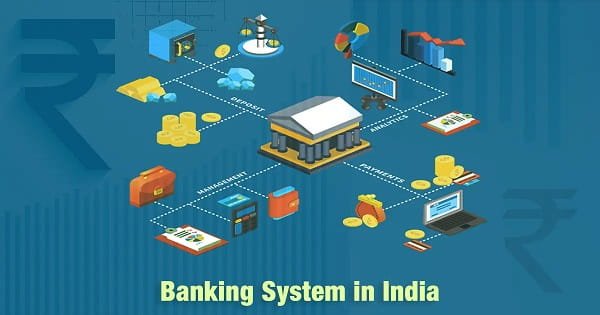
History of Banking System in India
Banking in India has developed over many phases. In the early period, banking was mostly linked with trade, moneylending and agency houses. Later, modern banking institutions started developing under British rule.
A major turning point came with the creation of the Reserve Bank of India. The RBI was set up under the Reserve Bank of India Act, 1934, and it started operations on April 1, 1935. Its original role included regulation of banknotes, maintaining reserves for monetary stability, and operating the credit and currency system of the country.
After independence, banking became closely linked with national development. The RBI was nationalised on January 1, 1949, and the Banking Companies Act, 1949 became the legal base for bank supervision and regulation in India.
Another major phase came in 1969 when major banks were nationalised. This helped expand banking access to rural areas, agriculture, small industries and ordinary citizens. Later, banking reforms in the 1990s brought more competition, technology, private sector participation and stronger regulation.
By 2026, Indian banking has become a mix of traditional banking and digital banking. UPI, mobile banking, internet banking, Aadhaar-based verification, digital KYC and instant fund transfers have made banking faster and more inclusive.
Structure of Banking System in India
The Indian banking system has a clear structure. The Reserve Bank of India is the central bank and apex regulatory authority. It regulates and supervises banks, manages monetary policy, controls currency issue, and supports financial stability.
Below the RBI, the banking sector includes scheduled and non-scheduled banks. Scheduled Commercial Banks include public sector banks, private sector banks, foreign banks, regional rural banks, small finance banks and payments banks, as listed by the Department of Financial Services.
Cooperative banks also form an important part of the system. They are especially important for rural credit, agriculture, small borrowers, local businesses and cooperative societies. RBI’s bank list separately includes scheduled commercial banks, state cooperative banks, urban cooperative banks, district cooperative banks and regional rural banks.
Types of Banks in India
1. Public Sector Banks
Public sector banks are banks where the government has major ownership. State Bank of India and nationalised banks form the main part of this category. These banks have a large branch network and play an important role in financial inclusion, government schemes, agriculture lending and retail banking.
2. Private Sector Banks
Private sector banks are owned and managed mainly by private shareholders. They are known for technology adoption, customer service, digital banking, credit cards, retail loans and corporate banking. HDFC Bank, ICICI Bank, Axis Bank and Kotak Mahindra Bank are well-known examples.
3. Foreign Banks
Foreign banks are banks headquartered outside India but operating branches in India. They mainly serve corporate clients, international businesses, wealth customers and trade finance users. They operate under RBI regulations along with the rules of their home country.
4. Regional Rural Banks
Regional Rural Banks were created to support rural credit and development. According to the Department of Financial Services, RRBs were established to provide credit and other facilities for agriculture, trade, commerce, industry and productive activities in rural areas, especially for small farmers, labourers, artisans and small entrepreneurs.
5. Small Finance Banks
Small finance banks focus on financial inclusion. They serve small businesses, micro enterprises, small farmers, low-income households and underserved sections. They can accept deposits and provide loans like other banks but with a strong inclusion focus.
6. Payments Banks
Payments banks are designed mainly for small deposits, digital payments and remittance services. They cannot operate like full-service commercial banks in all areas, but they help widen access to basic banking and payment services.
7. Cooperative Banks
Cooperative banks are member-based institutions that serve local communities, farmers, small traders and cooperative societies. They operate at urban and rural levels and are important for grassroots-level banking.
Major Functions of the Indian Banking System
1. Accepting Deposits
Banks accept savings, current, fixed and recurring deposits. This helps people keep money safely and earn interest.
2. Providing Loans
Banks lend money for homes, education, vehicles, business, agriculture, working capital and infrastructure. Credit creation is one of the biggest functions of banks.
3. Supporting Payments
Banks support UPI, NEFT, RTGS, IMPS, debit cards, credit cards, cheques, demand drafts and online payments. This keeps the economy moving.
4. Financial Inclusion
Banks help bring unbanked people into the formal financial system through basic accounts, rural branches, business correspondents and digital banking.
5. Supporting Government Schemes
Banks play a key role in direct benefit transfer, pension payments, subsidy transfer, Jan Dhan accounts, Mudra loans and other government-linked financial services.
6. Regulating Money Flow
Through the RBI, the banking system helps control inflation, liquidity, interest rates and credit conditions. RBI performs functions such as currency management, banker to government, banker to banks, monetary policy and payment system oversight.
Importance of Banking System in India
India’s banking system supports economic growth by mobilising savings and converting them into productive loans. It helps farmers buy equipment, students fund education, families buy homes, businesses expand, and governments distribute welfare benefits.
It also supports digital India. Without banks, UPI, debit cards, mobile banking and online payments would not function smoothly. Banks are now not just financial institutions; they are part of daily life.
Challenges in 2026
The Indian banking system still faces challenges. Cyber fraud, loan defaults, rising competition from fintech companies, rural digital literacy gaps, bad loans, data privacy, and customer grievance handling remain important issues.
Banks also need to balance growth with safety. Easy lending can increase consumption, but careless lending can create bad loans. Digital banking is convenient, but weak customer awareness can increase fraud.
Conclusion
The banking system in India has moved from branch-based traditional banking to a wide, technology-driven financial network. Its history includes RBI formation, nationalisation, rural expansion, liberalisation and digital transformation.
In 2026, India’s banking structure includes the RBI, commercial banks, cooperative banks, regional rural banks, small finance banks and payments banks. Together, they perform essential functions such as accepting deposits, giving loans, supporting payments, managing financial inclusion and strengthening economic growth.
India’s banking system is not just about banks; it is the financial engine that keeps households, businesses and the economy running.