
Yes, it is legal for banks to ask for PAN when a customer makes a cash deposit exceeding ₹50,000 in a single day. In fact, under the Income-tax Rules, quoting PAN is required for certain cash transactions above the prescribed threshold. RBI’s KYC directions also require regulated entities to obtain and verify PAN, or Form 60 where applicable, for transactions covered by the relevant Income-tax rules.
This requirement is mainly designed to improve transparency, maintain financial records and help tax authorities monitor high-value cash transactions. However, customers who do not have a PAN may generally have an alternative in the form of Form 60, where the applicable rules permit it.
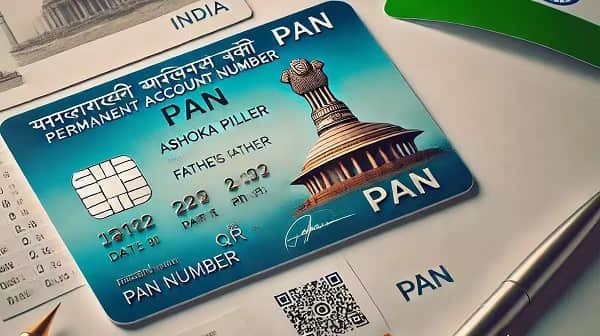
Why Do Banks Ask for PAN on Cash Deposits Above ₹50,000?
Banks operate under KYC, anti-money-laundering and tax-reporting requirements. PAN helps identify the person carrying out a financial transaction and allows transactions to be properly linked with the customer’s financial records.
Under the Income-tax framework, PAN is required to be quoted for cash deposits with a bank exceeding ₹50,000 in a day in the circumstances covered by Rule 114B. The Income Tax Department’s prescribed reporting information specifically notes this requirement for cash payments/deposits above ₹50,000.
Therefore, if a bank employee asks for your PAN when you are depositing more than ₹50,000 in cash, the request is generally based on a regulatory requirement rather than an arbitrary bank policy.
Does the ₹50,000 Limit Apply to Every Cash Deposit?
The ₹50,000 threshold should not be misunderstood as meaning that every deposit below ₹50,000 is automatically free from PAN or KYC requirements.
RBI’s KYC directions require customer identification in certain transactions involving ₹50,000 or more, including transactions by walk-in customers and situations where multiple transactions appear to be connected. They also require banks to take action where there is reason to believe that a customer is intentionally structuring transactions below the threshold.
For example, repeatedly depositing ₹49,000 or ₹49,500 in a way that appears designed to avoid applicable reporting or identification requirements may attract additional scrutiny.
Can You Deposit More Than ₹50,000 Without PAN?
If you have a PAN, the bank can require you to quote and verify it for transactions covered by the applicable rules.
If you do not have PAN, RBI’s KYC directions provide for obtaining Form 60 from persons who do not have PAN in situations where PAN is required under the Income-tax Rules.
Therefore, not having a PAN does not necessarily mean that you can never make a cash deposit above ₹50,000. The appropriate alternative documentation and declaration should be provided according to the applicable rules and the bank’s procedure.
What Is Form 60?
Form 60 is a declaration used by certain persons who do not have a PAN and undertake transactions for which PAN is required to be quoted under the Income-tax Rules.
RBI specifically states that banks should obtain PAN or the equivalent e-document where applicable and Form 60 from persons who do not have PAN.
A customer should provide accurate information in Form 60. It should not be treated as a way to avoid tax reporting or conceal the source of funds.
Can a Bank Ask for PAN Even If the Deposit Is Exactly ₹50,000?
Banks may request PAN or other identification depending on the applicable transaction and KYC requirements.
The important distinction is between above ₹50,000 and ₹50,000 or more because different regulations can use different thresholds for different purposes.
For example, RBI’s KYC framework requires customer identification for certain transactions of ₹50,000 or more, while the Income-tax rule concerning cash payment/deposit uses its own prescribed threshold.
Therefore, customers should not assume that ₹50,000 is a universal PAN threshold for every type of banking transaction.
Does PAN Requirement Mean the Deposit Is Taxable?
No.
Providing PAN to the bank does not mean that the entire amount deposited automatically becomes taxable income.
A cash deposit is simply a transaction. Its tax treatment depends on the source and nature of the money.
For example, cash may come from:
- Salary or business income
- Sale of goods
- Previous savings
- Agricultural activities, subject to applicable tax rules
- Gifts
- Loans from another person
- Sale of an asset
- Other legitimate sources
The customer should be able to explain and support the source of funds if required.
What Happens to Large Cash Deposits?
Banks maintain records and monitor transactions as part of their KYC and anti-money-laundering obligations.
Large or unusual cash activity can receive additional scrutiny, particularly when it is inconsistent with the customer’s normal transaction pattern.
Separately, the Income-tax reporting framework contains Statement of Financial Transaction (SFT) requirements for specified high-value transactions. For example, cash deposits or withdrawals aggregating to ₹50 lakh or more in one or more current accounts during a financial year are covered by the relevant SFT reporting provisions.
This should not be confused with the ₹50,000 PAN requirement. They are different regulatory thresholds serving different purposes.
Can You Deposit ₹50,000 Multiple Times?
Customers sometimes assume that depositing ₹50,000 several times will prevent PAN requirements or tax reporting.
This is not a safe assumption.
Banks and regulated entities are required to monitor transactions, including circumstances where several transactions appear to be connected or where there is a reason to believe that transactions are being structured to avoid regulatory thresholds. RBI specifically addresses such situations in its KYC directions.
Therefore, deliberately splitting a large cash deposit into smaller transactions merely to avoid applicable requirements can create compliance concerns.
What If the Bank Refuses a Cash Deposit Without PAN?
If you have been asked to provide PAN for a cash deposit above ₹50,000, the request is generally legitimate where the transaction falls within the applicable Income-tax and KYC requirements.
If you do not have PAN, ask the bank whether Form 60 can be submitted.
If you believe the bank is incorrectly refusing a transaction, you can:
- Ask the branch for the reason.
- Request information about the applicable KYC or tax requirement.
- Provide PAN or Form 60 as applicable.
- Ask for an acknowledgement of submitted documents.
- Raise a formal complaint with the bank if you believe the requirement has been incorrectly applied.
Is PAN Required for Cash Withdrawal Too?
PAN requirements can differ depending on the type and amount of transaction.
The ₹50,000 cash-deposit rule should not automatically be applied to every cash withdrawal. Income-tax rules contain separate provisions for different transactions and thresholds.
Banks also monitor cash withdrawals under their KYC and AML obligations, particularly where transactions are unusually large or inconsistent with the customer’s profile.
Therefore, customers should check the specific requirement applicable to the transaction rather than assuming that the same ₹50,000 rule applies everywhere.
Why Is PAN Important for Banking Transactions?
PAN plays an important role in India’s financial reporting system.
It helps:
- Identify taxpayers
- Link financial transactions with the correct person
- Improve transparency
- Support tax compliance
- Reduce the risk of financial misuse
- Help authorities detect suspicious financial activity
RBI’s KYC framework specifically requires PAN or Form 60 in transactions covered by the relevant Income-tax provisions.
Conclusion
Yes, banks are legally permitted—and in applicable cases required—to ask for PAN when a customer makes a cash deposit above ₹50,000. This requirement comes from the broader tax and KYC framework designed to improve transparency and monitor significant financial transactions. RBI’s KYC directions require banks to obtain and verify PAN for transactions covered by the relevant Income-tax Rules and allow Form 60 where the customer does not have PAN.
However, providing PAN does not automatically make the deposited amount taxable. What matters for taxation is the legitimate source and nature of the funds. Customers should also avoid deliberately splitting deposits to bypass regulatory thresholds.
If you are making a legitimate cash deposit and the bank asks for PAN, providing the required information—or Form 60 where applicable—is generally the correct way to complete the transaction.
Frequently Asked Questions
Q: Is it legal for a bank to ask for PAN for a cash deposit above ₹50,000?
A: Yes. Banks can require PAN for cash transactions covered by the applicable Income-tax Rules, including the prescribed cash-deposit threshold.
Q: What if I don’t have PAN?
A: Where applicable, you may be able to submit Form 60 instead of PAN. RBI’s KYC directions specifically provide for Form 60 from persons who do not have PAN.
Q: Does depositing more than ₹50,000 mean I will have to pay tax?
A: Not automatically. Tax liability depends on the source and nature of the money and the applicable income-tax provisions.
Q: Can I split a large cash deposit into smaller amounts?
A: You should not deliberately split transactions to evade applicable reporting or identification requirements. Banks are required to monitor transactions that appear to be structured to avoid regulatory thresholds.
Q: Is PAN required for every bank transaction above ₹50,000?
A: No. PAN requirements depend on the type of transaction and the applicable Income-tax and banking rules. Different transactions can have different thresholds.